
… Decries Politicisation of Agribusiness Subsidies
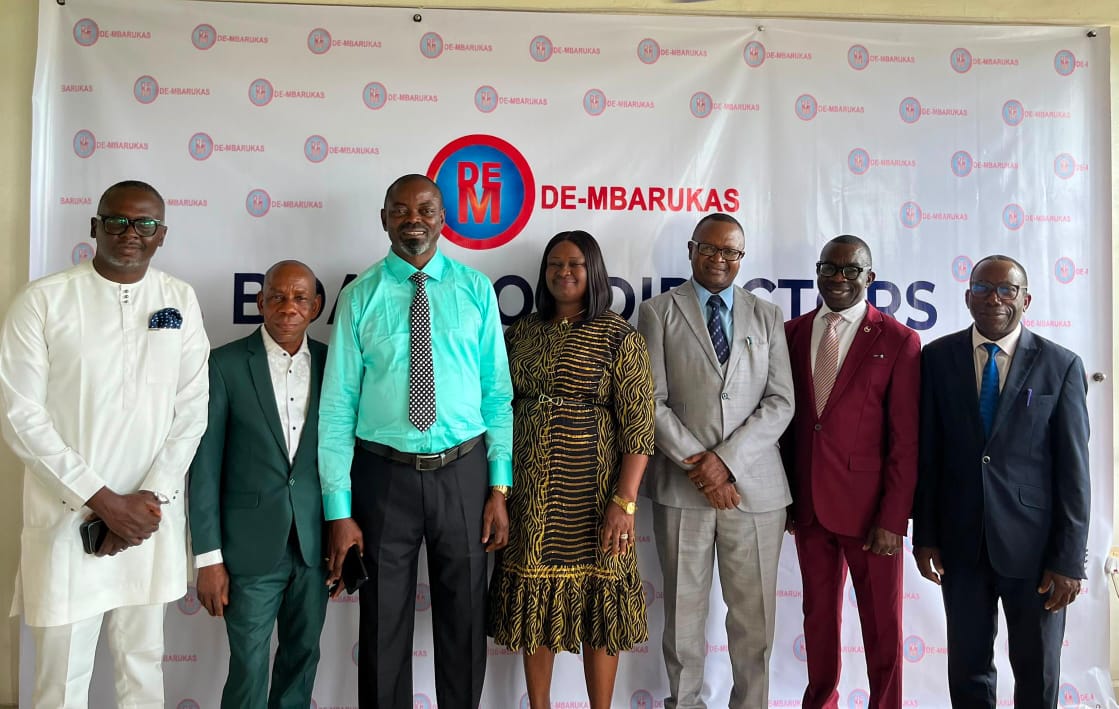
As part of activities preceding its Board meeting scheduled for Tuesday, June 23, 2026, De-Mbarukas Limited has outlined strategic initiatives that could address insecurity through urban planning and improve agricultural productivity through targeted interventions.
The Chairman of the company, Mr. Joseph Akpan, disclosed this during an on-the-spot visit to the company’s headquarters by our reporter, where he provided insights into its activities and policy direction.
Mr. Akpan stated that the company was performing strongly and had begun aligning its operational framework with evolving societal challenges, particularly in the area of security.
According to him, De-Mbarukas is collaborating with Akwa Ibom State University (AKSU) to develop a specialized programme in town planning designed to curb insecurity.
He identified poor urban planning as a major factor contributing to rising insecurity, noting that critical and vulnerable institutions such as schools are often located in isolated or forested areas, while security formations are concentrated in relatively safer urban centres.
“By the time security agencies respond to incidents in these remote locations, it becomes difficult to enforce law and order effectively,” he said.
Mr. Akpan further revealed that the initiative with AKSU would culminate in a national training programme targeted at Local Government Council Chairmen.
He hinted that the programme is intended to equip Council Chairmen with the knowledge required to design and implement development plans that prioritize security considerations.
De-Mbarukas Board Chairman linked the initiative to the growing autonomy of Local Government Councils under the administration of President Bola Ahmed Tinubu, explaining that increased financial and administrative independence places greater responsibility on council authorities to plan and execute development projects effectively.
“With proper planning, each local government can become an epicentre of development, and when harmonized at the state level, this will produce a more holistic and sustainable security framework,” he added.
On agriculture, the De-Mbarukas Chairman highlighted the role of Green Phase Limited, a subsidiary of the company, which is set to expand its operations, subject to the Board’s approval.
He disclosed that the company had already developed several hectares of agricultural land but emphasized that agriculture requires substantial government support to thrive.
Mr. Akpan, however, expressed concern over what he described as the politicization of agricultural interventions, where he criticized the seeming distribution of farming equipment and resources based on political considerations such as constituencies, rather than actual needs.
He cited the example of tractors being evenly distributed across local governments without regard to the type of agricultural activities predominant in those areas.
“Some local governments are more engaged in fisheries than crop farming, yet they receive tractors that may not be useful to them. This leads to inefficiency and underutilization of resources,” he said.
He also highlighted concerns regarding government interventions for farmers through cooperatives, noting that such efforts should extend beyond merely encouraging small-scale farmers to aggregate for large-scale production, emphasizing the need to also support established independent operators, such as Green Phase Limited, in advancing mechanized farming for greater efficiency and output.
He advocated for a needs-based approach, urging authorities to conduct proper assessments before allocating agricultural support, rather than adhering to politically motivated distribution formulas.
According to him, a more pragmatic system would ensure that resources are deployed where they are most needed, thereby maximizing impact and boosting productivity in the sector.
Mr. Akpan reaffirmed the company’s commitment to supporting government efforts in both security and agriculture, noting that collaboration between the private sector and government institutions remains critical to achieving sustainable development.
He also commended the government for its ongoing initiatives, while calling for a more strategic and forward-looking approach to policy implementation.
“We want to see a system that is holistic and futuristic, not one that is constantly changing without long-term direction,” he said.
The Chairman expressed appreciation to our reporter’s visit and his interest in the company’s activities, reiterating De-Mbarukas Limited’s readiness to contribute meaningfully to national development.
Leave a Reply